It’s always the Airstream spare parts you don’t have that you need.
That line came from a post in one of the Airstream owner Facebook groups this month, and it’s stuck with me. Someone asked a simple question, “what are your must-have Airstream spare parts and repair items?“, and the replies turned into one of the best crowd-sourced parts lists I’ve seen. Fuses, hitch pins, sail switches, a spare water pump, and yes, beer (one of my must have items).
I took that thread, tallied every item by how often it came up, then cross-checked it against five more owner communities (repair threads on Airstream Forums going back to 2021, a fifth-wheel forum, and two more Reddit discussions) to make sure this wasn’t just one group’s quirks. The result: an Airstream spare parts checklist built from 100+ real owner responses across six communities, not just one lucky thread.
Free Download: The Airstream Spare Parts Checklist
What Airstream Spare Parts Owners Actually Carry (Ranked by Mentions)
The honest answer to “what should I pack?” is: it depends on how you camp. A weekend-warrior at a full-hookup KOA needs a lighter kit than someone boondocking three hours from the nearest hardware store. But eight items showed up again and again, regardless of camping style. Those are your floor, not your ceiling.

Tier 1: The Non-Negotiable Airstream Spare Parts
- Spare fuses — When one blows, your slide, water pump, or furnace board can go dead with it. It’s a $2 part that can end a trip if you don’t have it.
- Zip ties — The fastest fix for a loose wire run or a cabinet door that won’t stay shut. I used one in this example of Airstream spare key hiding spots. Owners reach for these more than almost anything else in the kit.
- Gorilla or duct tape — Covers everything from a cracked vent cover to a leaking seam until you can do it right. One owner specifically carries propane- and plumbing-rated seal tape as a separate item — worth adding both.
- Extra hitch pins (for the hitch and the weight-distribution bars)
- Tire repair or tire-change kit — A flat in a remote spot without a working kit means you’re not moving until help arrives. This is one of the few failures that can strand you outright. I learned from experience that my tow vehicle’s jack wasn’t sufficient.
- Spare water pump — When boondocking, no pump means no running water: no sink, no shower, no toilet flush. One owner keeps just the pump motor as a lighter, cheaper spare than the full assembly, worth knowing that’s an option.
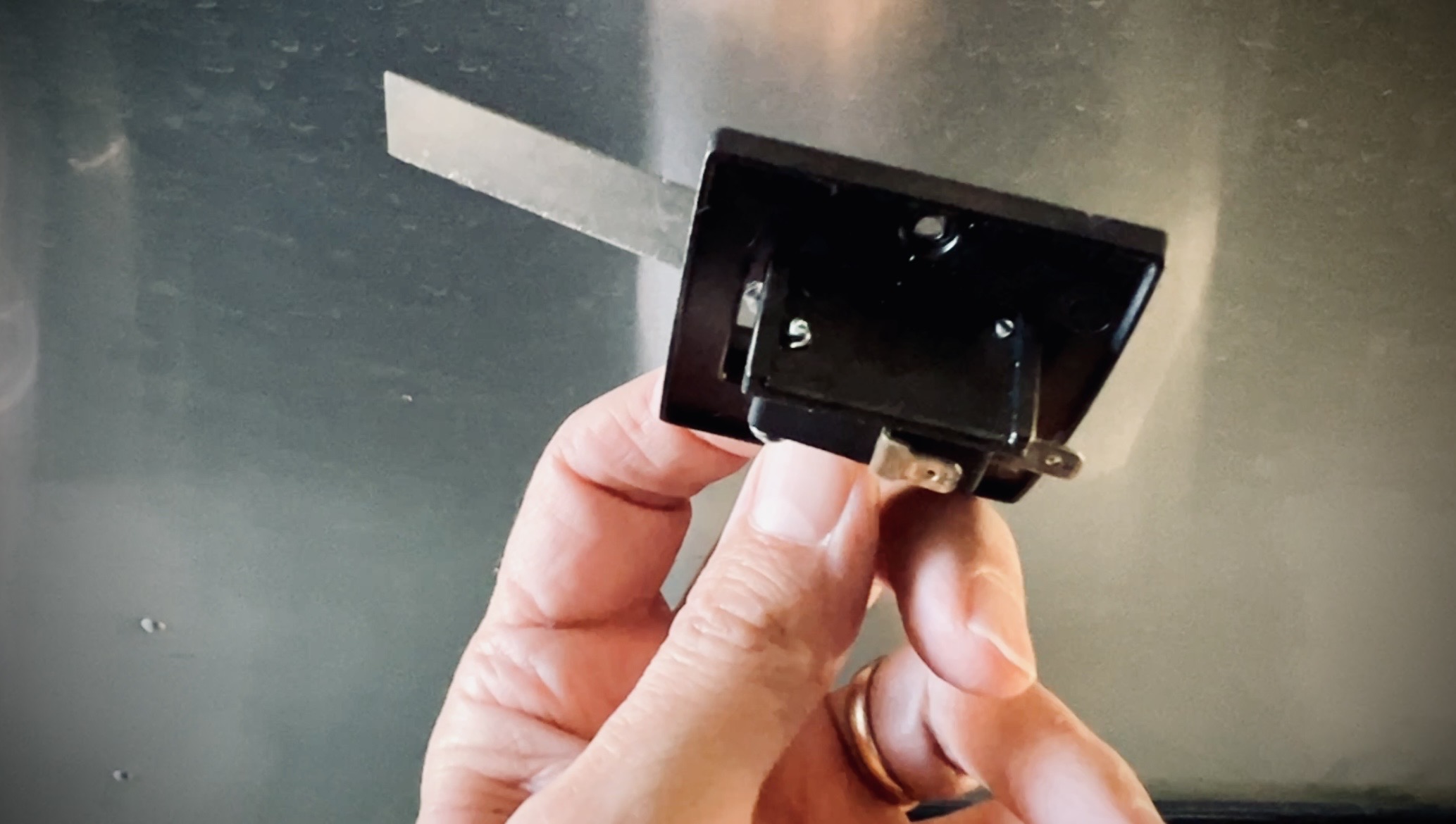
- Sail switch — This small plastic/metal part senses airflow in your furnace, and when it fails, your furnace won’t fire. No bueno for cold-weather camping. It shows up independently across five different owner communities as a recurring failure point, and it’s not always easy to find locally. If you camp anywhere temperatures drop, this earns its spot.
- Breaker bar + sockets — This should technically be part of your tire-change kit. For lug nuts, hitch bolts, and anything torqued down tight enough that a standard wrench won’t budge it. Multiple owners flagged this as the tool they reached for that they didn’t expect to need.
That hitch pin one deserves a callout. One owner shared a story about a friend who set his pins on the bumper to disconnect, then drove off to grab a pizza, bars and all. If it can happen to someone paying attention, it can happen to you. Buy a spare set and keep it in the trailer, not just the truck.
Tier 2: Highly Recommended
Toilet seal and flush valve gasket, hitch ball grease, a real flashlight, roadside reflectors, and a couple of small USB power banks. These are the parts and tools that don’t fail often, but when they do, you’re not driving to a store to fix it.
Tier 3: Smart to Carry
This is where kits start to diverge based on how remote you camp. Dehumidifiers, water filters, pressure regulators, volt meters, and a proper socket set all came up, mostly from owners who described themselves as boondockers or people who camp far from services. One owner put it simply: everything else I can buy once the trailer is mobile again. That’s a good filter for your own kit. Pack for the failures that would strand you, not every possible failure.
What Didn’t Make the List
Not everything that gets mentioned in these threads earns a spot in your kit. A few things came up often enough to note, but didn’t survive the “would this actually strand me” filter:
- Full spare toolboxes of general automotive tools — useful, but bulky, and most of what’s in a standard kit (wrenches, screwdrivers) you likely already carry for the tow vehicle.
- Tow-vehicle-specific spares (extra motor oil, transmission fluid, tow vehicle tires) — real, but they belong in your truck’s kit, not your Airstream’s. Different vehicle, different failure points.
- Motorhome-specific parts like serpentine belts or windshield wipers — these show up in general RV forums, but a towed Airstream doesn’t have an engine or a windshield, so they don’t apply here.
If you’re not sure whether something belongs in your kit, ask: would losing this actually stop me from camping, or would it just be inconvenient? Pack for the first category. Buy the second category when you get home.
The Best Tip in the Thread
Buy a small hard case, Pelican-style or similar, label it “Trailer Parts,” and keep everything in one place. Half the stress of an in-the-field repair isn’t the repair itself, it’s digging through three different bins trying to remember where you put the spare fuses. One owner does exactly this, and it’s the single easiest habit to steal from the whole thread.
Download the Checklist
Save it as a PDF on your phone, print it for the glovebox binder, or check items off as you build your kit this season. It’s built the same way the community built it: ranked by what real owners reach for first.
Download: The Airstream Spare Parts & Repair Kit Checklist
Got something on your own list that didn’t make the thread? Drop it in the comments and I’ll fold the most-mentioned new items into the next update.
Glamp on!
Frequently Asked Questions
What’s the #1 Airstream spare part to carry?
Spare fuses and a spare water pump tie for the most-mentioned items across every owner community we checked. Fuses are cheap insurance against losing power to your jack, awnings, furnace, or interior lights; a dead water pump means no running water at all.
Do I need a spare Airstream water pump?
Yes, if you ever camp off city water. The pump only runs when you’re pulling water from your onboard tank: boondocking, dry camping, or a rest-area stop, so a spare matters most for off-grid trips, not full-hookup campgrounds. A failed pump is one of the most commonly reported failures across every source we checked. I picked up a Shurflo replacement on Amazon for under $70 — here’s the short video showing how to install the Shurflow water pump in an Airstream.
Why does the sail switch keep failing?
The sail switch is a small plastic and metal flap that senses airflow to confirm your furnace can safely ignite. Sail switches rarely “wear out” mechanically; rather, they fail primarily due to dust, pet hair, or lint buildup on the sail paddle or minor corrosion on the microswitch contact. Cleaning the sail paddle with compressed air or a soft brush often restores function, though keeping a $15–$20 spare is common practice. It’s a low-cost part and isn’t always stocked locally, which is why so many owners carry a spare rather than hunting for a replacement mid-trip.
Why do so many owners carry Gorilla tape or duct tape?
Because it’s the one item flexible enough to solve problems you can’t predict. Owners use it for everything from a cracked vent seam to a torn window screen to bundling a loose wire until a real fix is possible. It’s not a permanent repair, it’s a way to keep camping until you’re near a hardware store or service center.
Why do Airstream water pumps fail so often?
Modern RV diaphragm pumps (like Shurflo 4008/2088 series used in many Airstreams) are engineered to run dry without immediate damage to the flexible diaphragm or valves. The leading causes of premature pump failure in RVs are debris/sediment getting sucked into the valves (when an inline suction strainer isn’t installed), pressure switch microswitch failure from rapid cycling, or winter freezing when water left inside expands and cracks the plastic pump housing.
Why does using the correct torque matter so much on an Airstream?
Over-torquing lug nuts is one of the most common and expensive mistakes new owners make. It can warp the brake rotor or drum, or worse, stretch and weaken the wheel studs, which is a safety issue at towing speed. Airstream lug nuts typically torque to a specific spec (commonly in the 90 to 120 ft-lb range depending on model and wheel type), which is why a proper breaker bar and torque wrench, not just the compact lug wrench in a tire kit, is worth the trunk space.
Visit the GenX Glamping Guy on YouTube for helpful Airstream, camping, and glamping videos
Leave a Reply